

Back To School: 40 Sensory Support Tips For The Classroom
Children have varying sensory needs that can impact their focus and regulation in the classroom. This article lays out easy to implement sensory strategies for parents to help implement with their children as well as simple strategies for the classroom teacher.
This content is not intended as a substitute for medical advice, diagnosis, or treatment. Always seek the advice of your physician, therapist, or other medical professional regarding a medical condition or treatment. This content is for informational purposes only.
This post may contain affiliate links. I may earn a small commission from qualifying purchases at no extra cost to you. Thank you for your support. See our full disclosure.
Back To School Sensory Tools
School is almost back in session! Here are some helpful sensory tips for the classroom, playground, and the lunchroom as well as tips when changing classes. Sensory strategies that may be a good fit for one student may not be a good fit for another. Make sure to check with your learners’ occupational therapist to see which tips are right for your child. Some equipment, such as alternative seating listed below, may already be available in the classroom. Check with your school before purchasing.
School Sensory Tips: Classroom-Based Sensory Tips
If your learner is having trouble concentrating or feeling overwhelmed in a group setting, try some of these tips.
- Before school, participate in heavy work activities. These activities include animal crawls, wheelbarrow walks, carry a stack of heavy books (as age appropriate) and push ups. Add these into your morning routine when navigating from room to room (kitchen to bedroom, bedroom to bathroom, etc).
- After completing heavy work activities, apply deep touch pressure as tolerated by the child. Think bear hugs, back massage, roll an exercise ball or pool noodle over the back, arms and legs. You can even use a pillow. Never apply deep pressure to the face or stomach. Adjust the pressure as stated by the child making sure it’s not too much or too little. These strategies can help set a child up for success when arriving at school.
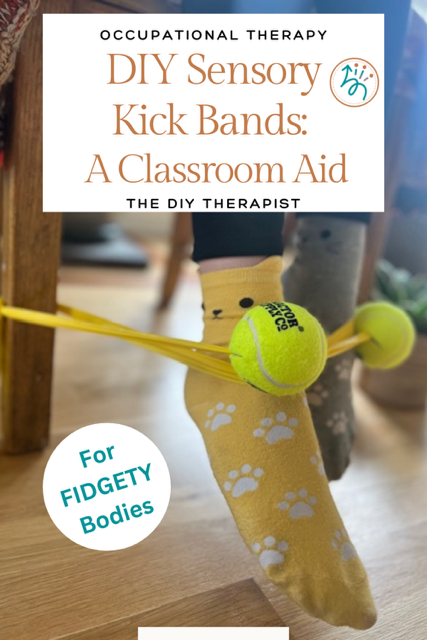
- Do sensory kick bands for the chair help? Alternative seating in the classroom can also be helpful such as wobble cushions and exercise or therapy balls. Check with your classroom teacher and/or therapist to see if any of these might already be available and a good fit.
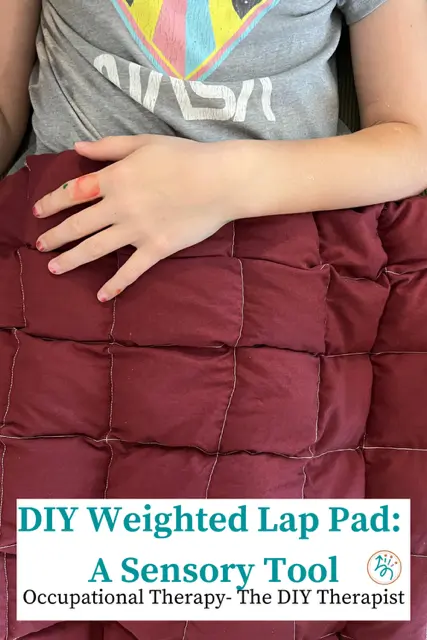
- A DIY weighted lap pad or a weighted stuffed animal can be beneficial. Use as recommended by your OT during school hours with approval by the classroom teacher.
- Do visual aids or a visual timer help support your learner during the school day? A large visual timer in the classroom can help prepare your student for transitions and complete work on time.
- Chair push ups and wall push ups can be helpful in the classroom as well. With arms positioned at the side, palms down on the chair with finger tips over the sides, raise the body up off the chair by extending the arms. This is a great heavy work activity for the classroom and can be done by the student when needed. Practice these at home, even at the dinner table.
- Ask that your learner be a helper in the classroom as often as possible. Duties such as erasing the board, picking up items off the floor, straightening or stacking chairs, and/or being a door holder.
- Sensory breaks for the entire classroom! Jumping jacks, yoga and/or whole body stretching, and march around the classroom.
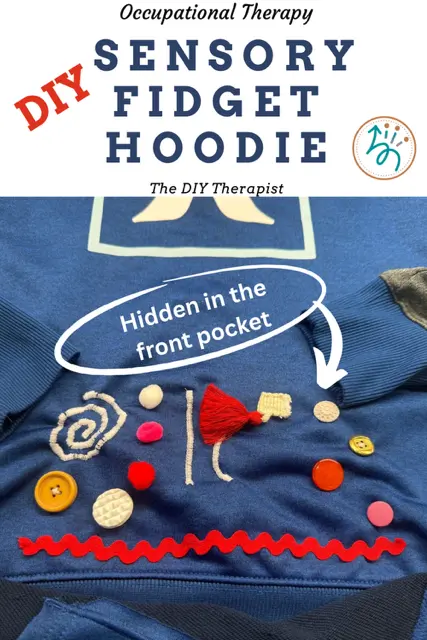
- Have finger fidgets available at your students personal desk or backpack. Finger fidgets can help instill a sense of calm and relaxation while also helping to regulate the sensory system in a discreet, non-distracting way to other students. Check out my tutorial for the DIY finger fidget sensory hoodie featuring finger fidgets hidden inside the front pocket of a hoodie.
- Practice taking deep breaths and visualization strategies before anticipated high stress times such as before lunch or changing classes.
Discuss with the classroom teacher or during the IEP meeting to see if incorporating sensory breaks during the school day would be a good fit. Encourage sensory supports to be available during this time such as a sensory body sock, weighted blankets, areas to participate in heavy work and deep pressure as well as vibration stuffed animals.
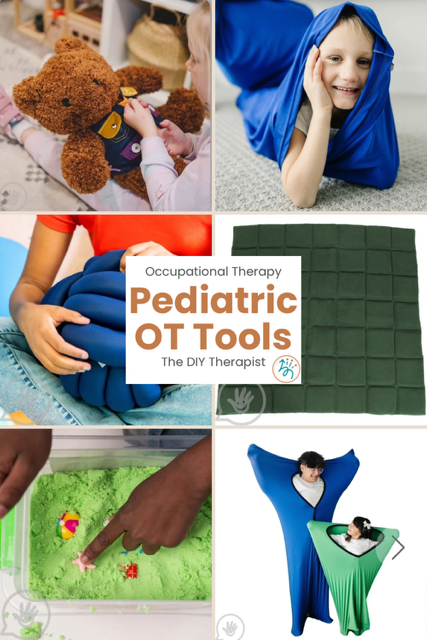
No Time For DIY?
Check out my list of favorite occupational therapy tools for kids. Click the button below to see the full list.
School Sensory Tips: Playground Sensory Strategies
If your learner is having trouble navigating the playground equipment or feels overwhelmed by so much activity, noise, and movement try some of these tips.
- If navigating and exploring playground equipment is difficult, try going to your school’s playground prior to the start of the school year to practice climbing on the playground equipment. Visit the playground after school or even on the weekends.
- Try chair push ups (as stated above) before going outside to the playground.
- If your student feels overwhelmed by the activity level on the playground, discuss with your child what they can do to help calm their sensory system. Is there a quiet place off to the side? Can they sit comfortably on the ground, knees up with arms wrapped around for a tight squeeze? Or will swinging or heavy work climbing activities help regulate their sensory system? Maybe running games such as tag and the old school game Red Rover help provide a little deep pressure?
School Sensory Tips: Lunchroom Sensory Strategies
The cafeteria can be downright overstimulating. There is often so much noise, clanking dishes, different foods and smells all while trying to listen and carry on a conversation with others. Here are some tips to consider:
- If approved by the teacher and/or lunchroom staff, wear earplugs, noise cancelling headphones or even ear buds (a broken pair is best in case they are lost; check with your friends and neighbors for a broken pair). No music (as this is often not allowed in school). Just noise cancelling.
- Ask to sit at a quieter table away from large groups. Invite friends.
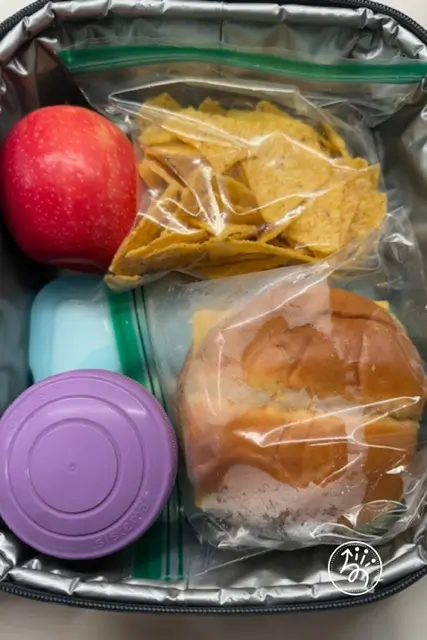
- Oral sensitivities? Pack preferred foods. Pack lunch together the night before so that your child can pick their favorite healthy foods.
- Participate in heavy work and deep pressure activities before lunch such as chair push ups and self-directed bear hugs with arms crossing the body reaching around towards the shoulder blades.
- For those with oral sensory needs, pack chewy, crunchy foods as age appropriate such as granola bars, apples, dried fruit, bagels, celery, and carrots.
- Using a water bottle with a straw as well as chewing gum, if allowed, may also help to fulfill oral sensory needs.

School Sensory Tips: Class Schedule + Changing Classes
- If this year will be your learner’s first semester changing classes, watch a movie clip and discuss what happens, any concerns they may have, and how to navigate without getting too flustered in the hallways.
- If possible before the school year begins, ask the office staff if you can get their schedule before school starts. Walk the hallways from 1st period to 2nd period to 3rd period and so on. Discuss what can happen in the hallways, things to avoid, and how to get from classroom to classroom without getting too overstimulated. Practice again during your school’s Open House when more kids are gathering in the hallways.
- Are there certain overcrowded halls or areas that should be avoided? I know there was at my high school. One area in particular sometimes ended up in a pushing match just to get through. If this is the case, figure out a way around to avoid overcrowded halls.
- If time allows, consider suggesting your learner slowly pack their things and wait a couple minutes for the crowds to clear a little and congestion fade.
Easy To Implement Teacher Sensory Strategies for the Classroom
Children have varying sensory needs during the school day. It’s important to discuss with your school’s occupational therapist about the best strategies for your classroom and ways to implement those strategies. Here are some easy to implement sensory tips for the classroom:
Auditory
- Have a quiet corner available for learners. This designated space can give students a quiet space to relax and unwind. A visual barrier such as a small canvas tent or simple room divider or partition may be helpful.
- Provide noise cancelling headphones for learners who get easily overwhelmed by loud noise.
- Consider playing gentle, soft background music such as nature sounds and instrumental music.
Tactile
- Create a series of small boxes or Tupperware containers that hold specific sensory items. One box can be for fidgets, and another hold various items featuring different textures such as fabrics. While another box contains different types of putty and dough such as Thera-putty, playdough, and weighted sand. These stations can be set up a mini sensory breaks.
- Create a sensory bin using rice, other dried beans such as lentils, or other dried beans or noodles. Add cups and spoon, small toys, and small items to search for with the hands. Set rules around sensory bins (ie: throwing and/or intentionally spilling contents). Spreading out a sheet can be helpful for clean up.
- Have fidgets available in the classroom for kids to bring back to their desk when needed such as smooth rocks, spinning or twirling devices, stress balls, weighted items, and squishy balls.
Movement + Heavy Work
- Incorporate sensory breaks for the whole class. Have the entire class stand and participate in movement activities such as jumping jacks, marching and stomping around the room, stretching and yoga, animal crawls, and full body wiggles. Toss around a weighted knot ball such as when playing the game hot potato. Play music and have dance party.
- Encourage your students to do self-directed bear hugs by wrapping their arms across their body and squeeze tight.
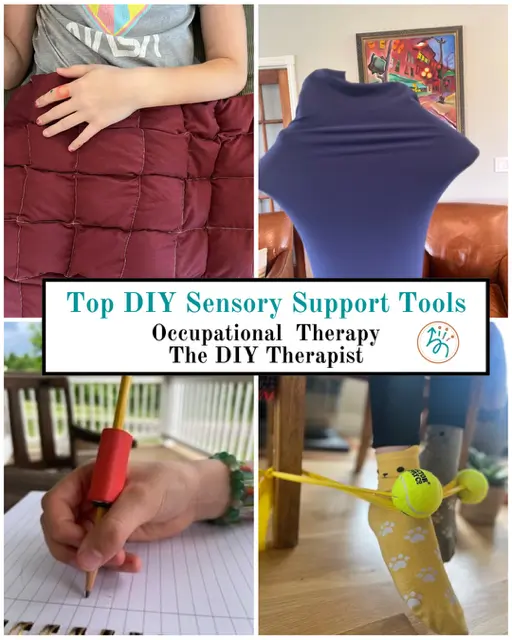
- Have a weighted lap pad(s) and weighted stuffed animals available for use during the school day. Check in with your OT about time limits.
- Have wobble cushions and therapy or exercise balls available as alternative seating for students who need a little more movement in their day to help focus attention.
- Add kick bands under chairs for learners who need more movement in their day. Kick bands are a super quick yet effective sensory strategy.
- Try to involve the children with sensory processing differences in the classroom as part of your clean up crew and classroom helpers. Have your learners hold doors, tidy up the classroom, stack chairs, erase the board, and take messages down the hall.
Visual
- Minimize clutter by keeping walls and work spaces clean and organized. Get your students involved in helping to keep their classroom clean and organized.
- Use natural light as much as possible, reducing fluorescent lighting. If needed, dim or cover fluorescent lights if possible.
- Provide a visual schedule to help with displaying the day’s activities. This can be helpful for transitions.
- Set a visual timer that all students can easily see. Visual timers can help learners manage their time, complete assignments, and prepare for transitions.
- Have your students create desk shields using file folders to help eliminate visual distractions.
Conclusion
There are a lot of sensory supports that can help your learner in the classroom from fidget kick bands to weighted lap pads, weighted stuffed animals to weighted sand. Set up schedules, prepare and discuss new changes to school routines, schedule sensory breaks, and have sensory supports available at home and school readily available. Always discuss with your child’s personal occupational therapist about which sensory supports are a good fit for your child.
READY TO SHOP SENSORY SUPPORTS?
Check out my list of favorite sensory support tools by clicking the button below.
Resources
Sensory Support Tools- Where To Buy
- Weighted Sand Kit- Beach theme for sensory play in the classroom from Fun and Function. A favorite.
- Sensory Body Sock by Fun and Function with sizing options to include both adults and children.
- Add a jumbo weighted lap pad to your child’s school day. The weight of the lap pad provides a calming effect to the user so that they can better focus their attention.
- Weighted teddy bear by Fun and Function is a great addition to classrooms, sensory rooms and school.
- Weighted knot balls are a fun addition for kids not only in the sensory room but also in the classroom. Gently toss around, roll back and forth, slides your hands between the ropes, pick up and participate in heavy work exercises. Roll across the back and legs for a deep pressure component. These knotted balls are too fun.
- Stretch Me Chair Fidgets also known as sensory kick bands are super quick to install to standard sized chairs. Great for fidgety bodies in the classroom as well as at home while completing homework.