
Home » 20+ Mistakes When Making And Using A Weighted Lap Pad

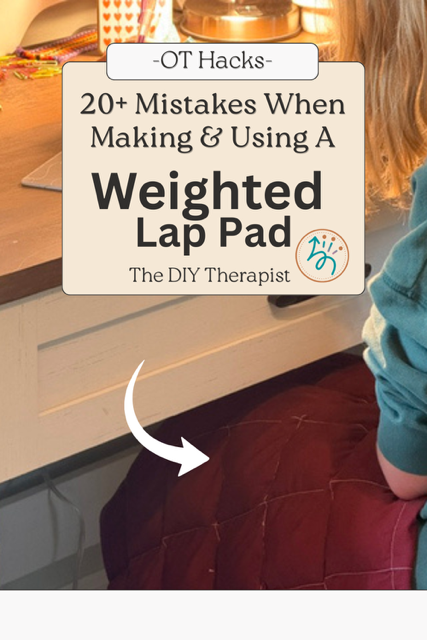
20+ Mistakes When Making And Using A Weighted Lap Pad

Are you using a weighted lap pad correctly?  In this post, learn 20+ mistakes that are often made between making and using a weighted lap pad. 

Learn 20+ mistakes when using and making a weighted lap pad

This content is not intended as a substitute for medical advice, diagnosis, or treatment.  Always seek the advice of your physician, therapist, or other medical professional regarding a medical condition.  This content is for informational purposes only.  

This post may contain affiliate links.  As an affiliate, I may earn a small commission from qualifying purchases at no extra cost to you. Thank you for your support.  See our full disclosure here

Weighted Lap

Questions about weighted lap pad often arise.  Whether it’s about the wear-time schedule, type of filling to use, appropriate weight, or how and when to use it.  This occupational therapy guide will walk you through 20+ mistakes or misunderstandings that have arisen in my experience as an occupational therapist.  

What Is A Weighted Lap Pad?

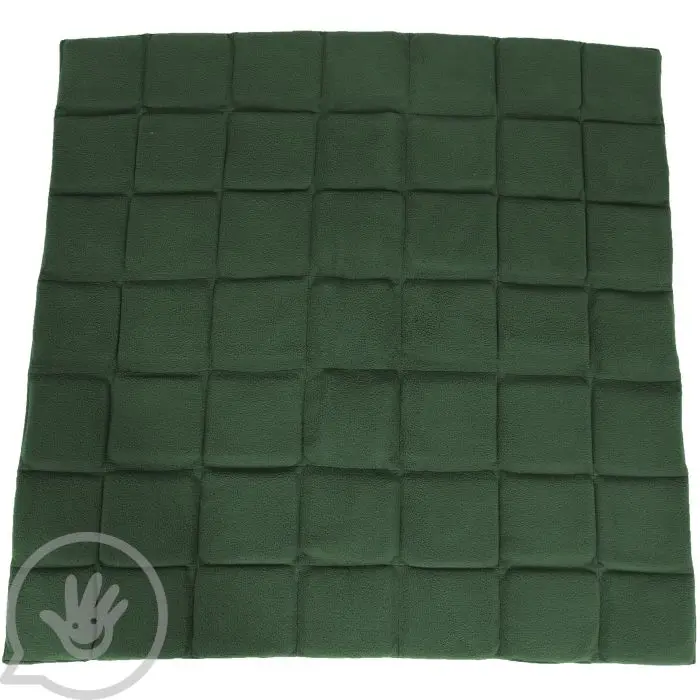
A weighted lap pad is a miniature version of a weighted blanket which is often placed over the user’s lap to provide a sense of relaxation.   

 Weighted lap pads are often recommended by occupational therapy practitioners to help address sensory regulation needs.   This type of sensory tool is often used to support children and adults during the school day and while at home and in the office to self-regulate.

Proprioception and Deep Pressure

The weighted lap pad as well as the weighted blanket both provide the user with calming deep pressure and proprioceptive input.  This input is received through the muscles and joints along the legs and lap, and helps users to relax, calm, and regulate the nervous system.  

The proprioception is one of our ten, widely recognized, human senses and is part of the somatosensory system.  Proprioception contributes to body awareness including body position, posture, and as well as maintaining balance.

Sensory Diet

Most often, weighted lap pads are recommended in coordination with a sensory diet.  A sensory diet is not a food diet, although food is sometimes involved.  Instead, a sensory diet is a curated list of sensory support activities or exercises that are scheduled during the day to help children and adults self-regulate their bodies.  Contact your personal OT practitioner regarding a personalized sensory diet. 

A weighted lap pad is more than just a oversized bean bag, it’s a clinical tool for sensory regulation.

The Intentional Practitioner: A Rehabilitation Therapy Workbook for physical therapy, occupational therapy, and speech-language pathology practitioners.

Need a treatment planning companion?

Elevate your practice and get organized with The Intentional Practitioner workbook specifically designed for OT, PT, and SLP practitioners. Thank you! I am so grateful for your support.
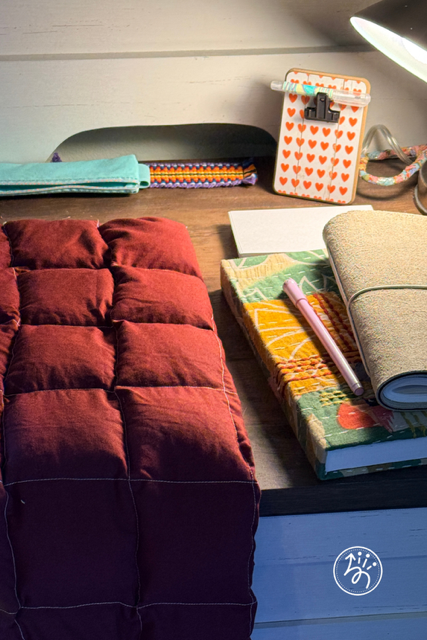
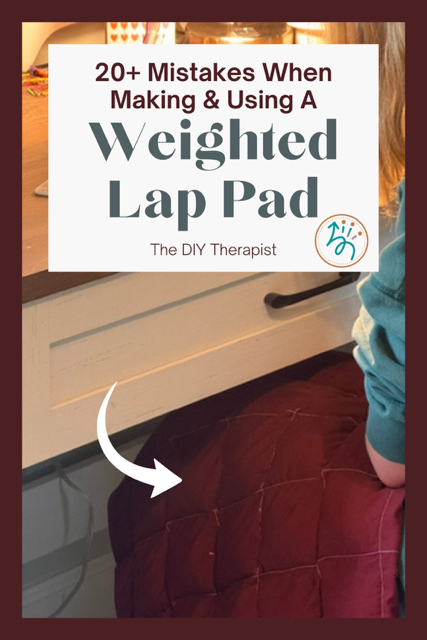
Learn 20+ mistakes and misunderstandings that often occur while making and using a weighted lap pad.

What Is The Purpose Of A Weighted Lap Pad?

Weighted lap pads, along with weighted stuffed animals and weighted blankets, help children and adults to:

  • Self regulate
  • Better focus
  • Improve attention
  • Decrease anxiety and reduce stress
  • Improve school performance
  • Complete homework in a more efficient manner
  • Improve behavior
  • Reduce fidgeting
  • Stay seated and focus for longer periods of time such as during the school or work day
  • Alleviate restlessness
learn 20+ mistakes when making and using a weighted lap pad

Who May Benefit From Using A Weighted Lap Pad?

For both adults and children, a weighted lap pad can help provide support for: 

  • Sensory processing disorder or differences
  • Neurodivergent individuals
  • Autistic individuals
  • Attention differences
  • Tactile defensiveness
  • Sensory seekers
  • When feeling overwhelmed or overstimulated in certain environments
  • During heightened anxiety in social situations such as when in the classroom or work environment
  • High anxiety during appointments such as when at the dentist or while getting a haircut
  • Heighted activity level when unable to seek out movement
  •  When a child appears to have “shutdown”
  • Older adults living with dementia to help alleviate agitation and unwanted behavior

Other Types Of Weighted Tools To Consider

Easy 20-Minute Weighted Lap Pad Tutorial

My version of the DIY weighted lap pad requires less sewing than the traditional weighted lap pad tutorials seen online.  My version uses a strong, sturdy pillowcase as the shell of the weighted lap pad; therefore, less sewing is required. Plus, there is no need to iron seams.  I love easy, quick tutorials. Check out my 20 minute DIY weighted lap pad tutorial here.

fun and functions jumbo weighted lap pad 6 pounds

Here is my favorite professionally-made weighted lap pad

Don't want to make it? I totally understand. Here is a link to one of my favorite weighted lap pads. If you need a different weight, search Fun and Function's weighted lap pads to find the weight that is just right for you or your loved one.

Mistakes In Lap Pad Preparations

  1. Not discussing with your personal occupational therapy practitioner: As always talk with your personal OT about the use and potential benefits of using a weighted lap pad before collecting materials and getting started.
  2. Not determining if the weight is tolerated: Before starting the project, try adding the approximate weight of a lap to the lap of the individual while seated. Use books, heavy blankets, etc. to replicate a weighted lap pad. Is it tolerated? Do they like the weight?  Does it make them feel calm and relaxed?

DIY Weighted Lap Pad A sensory tool

Mistakes In Lap Pad Materials

  1. Using compromised fabric that tears easily: In my DIY version, I use a thick sturdy pillowcase, not a heavily used, thin pillowcase that will rip easily and leak pellets.
  2. Selecting non-preferred fabrics: For the base of the lap pad, use a soft but durable fabric, not a pillowcase that is irritating to the user. An additional pillowcase can be placed over the weighted lap pad to help prevent liquid spills directly onto the weighted lap pad. This outer additional pillowcase will most often be in contact with the skin.  Some individuals may prefer more of a “sensory tactile playground” as the outer shell.  Feel free to sew embellishments such as buttons, ric rac, tassels onto the outer cover of the lap pad similar to when making a sensory fidget hoodie. Or go simple and add a small loop or fidget to a corner(s). 
  3. Using thread that breaks easily: It’s best to use polyester thread.  Polyester thread is stronger than cotton and is known for its durability plus it can withstand a lot of pull.   For me, polyester thread was more difficult to find locally, so you may need to order it online. 
  4. Using the wrong type of weights:  Do not use dried beans, rice, or fishing weights. Dried beans and rice can mold, and fishing weights contain lead which is never good to use.  The best weight to use is plastic poly-pellets or glass microbeads.  With plastic poly-pellets, some to minimal noise is heard during movement while on the other hand, glass microbeads are quiet. My tutorial is specifically for plastic poly-pellets, not glass microbeads.  *If you know of an environmentally friendly, plant based pellet, please let me and the community know in the comments below. Thank you! 
  5. Not taking auditory (noise) and tactile (touch) sensitivities into account. If the user is sensitive to noise, glass microbead may be the best weight choice to use for their lap pad. Glass micro-beads also offer a smooth alternative to poly-pellets for those with tactile sensitivities.  As I said above, my tutorial is for plastic poly-pellets, not glass micro-beads.  * Maybe a DIY glass microbead lap pad tutorial will be in my near future. 
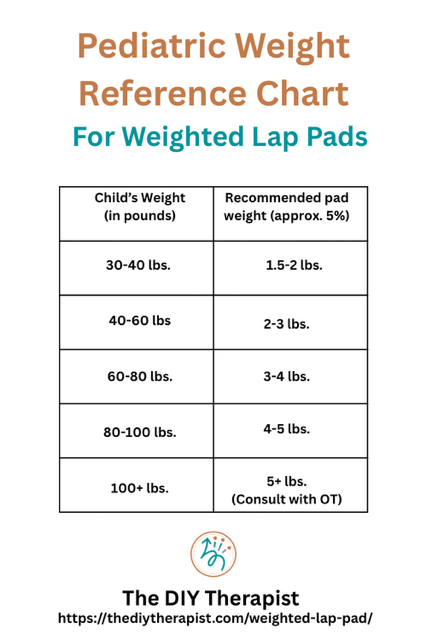
Pediatric weight reference chart for making your own DIY weighted lap pad. Weight is shown in pounds.

Mistakes In Making The Lap Pad

  1. Sewing too large of rectangles to hold the weights in place.  If the rectangles are too large they can cause it to be bulky and will not lay correctly over the lap.  Small rectangles are essential for holding the weights.  Check out my easy to sew weighted lap pad tutorial– you’ll have it done in less than 20  minutes.
  2. Not using a funnel when pouring beads into the individual portions. If you do not use one, you could end up with a big mess. If you don’t have funnel on hand, make your own using a piece of paper such as construction paper.  Bend into a cone shape and secure with tape, making sure there is a small opening for the pellets to flow through. See the materials picture above. 
  3. Not measuring:  ⅓ cup (1.6 ounces) to 1/4 cup of poly pellets per filling section is recommended to evenly distribute the weight.  If the individual rectangles or filling spaces are overfilled, it could cause it to be bulky and stiff.  This in turn will cause it to lay across the lap improperly, distributing the weight inaccurately.  Check out my tutorial for the full details.
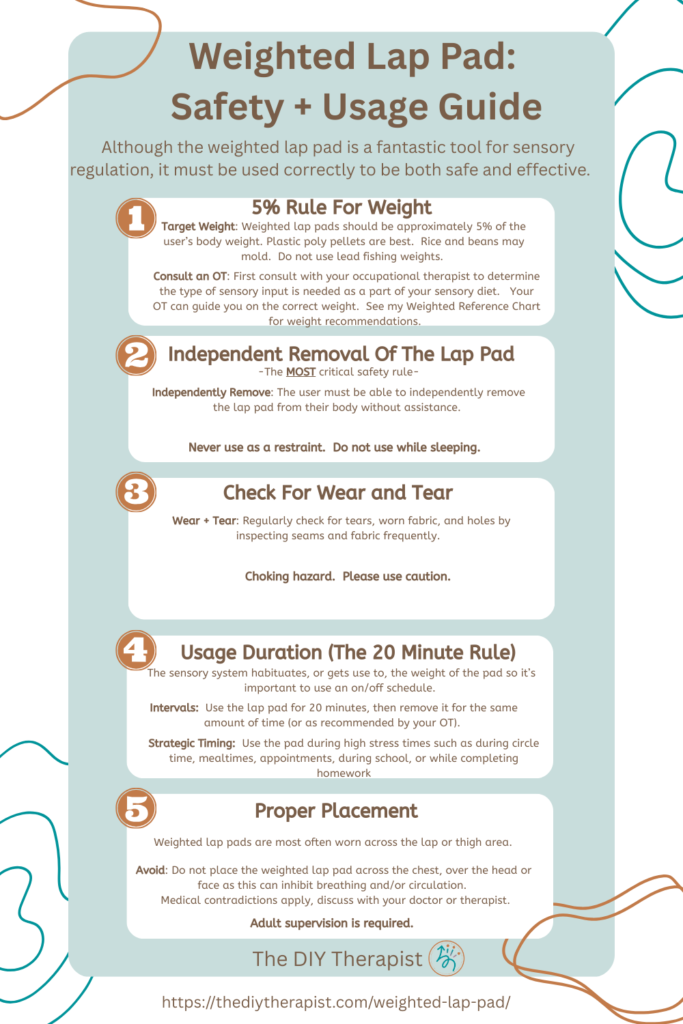
  4. The “More Is Better” myth: Exceeding the recommended weight can be harmful to the individual.  Weighted lap pads should be no more than 5% of user’s weight.  Refer to the pediatric lap pad weight reference chart above.
Weighted lap pad safety and usage guide. This infographic makes the OT recommendations easy to follow and apply.

Mistakes In Use

  1.  Not discussing with your occupational therapist or OT assistant about the wear schedule.  The on/off wear schedule is vitally important to discuss with your OT practitioner. When it comes to weighted sensory devices such as the lap pad or blanket, the body can get used to the weight, habituate to it, and it will not be as effective in regulating the sensory system.  So the on/off schedule is super important, typically 20 minutes on followed by 20 minutes off. Check with your personal OT for details. 
  2. Not monitoring sensory regulation: Does the user of the weighted lap pad become more regulated during use?  Does their attention or behavior improve?  If no sign of improvement is seen, discuss it with your occupational therapy practitioner as the weighted lap pad may no longer be needed, or possibly signs of regulation aren’t being noticed. 
  3. Not using it in coordination with a sensory diet: Sensory diets are often recommends by OT practitioners in conjunction with weighted lap pads.  Sensory diets help users to better self-regulate their sensory system through a scheduled list of sensory support activities or exercises.  See “Sensory Diets” above and contact your personal OT for more information. 
  4. Not checking for rips: Regularly check for rips and tears in the fabric as well as the thread integrity making sure threads are not coming loose.  Weighted lap pads are a choking hazard. 
  5. Using it when you are NOT supposed to:  It is vitally important that the weighted lap pad only be used during the day while awake, NOT while sleeping.  Suffocation risks are associated with using weighted lap pads while asleep. An on/off schedule also needs to be in place.  See #1 in this section for more details. Adult supervision required.
  6. The All-Day error:  Using the weighted lap pad a majority of the day is a big no, no.  Instead follow the recommendations of your OT.  Follow the schedule of 20 minutes on followed by 20 minutes off or that recommended by your occupational therapy practitioner.
  7.  Ignoring precautions: Make sure to follow the following precautions: 1) All users must be over the age of 4 years and weigh at least 50 pounds, 2) all users should be able to lift the weighted lap pad above their head easily without assistance, 3) do not use while sleeping, 4) discontinue use is irritation occurs, 5) never use as a restraint, 6) glass microbeads and plastic poly-pellets are a choking hazard, 8) medical contradictions apply.  Discuss with your doctor or OT. Lap pads are not recommended for sleep apnea, asthma, epilepsy, low blood pressure, diabetes, or claustrophobia- this is not a complete list, consult with your medical professional, and 7) adult supervision is required. 
  8. Ignoring when the user does NOT want to use the lap pad: Always listen to the lap pad user when they do and do not want to use the lap pad.  Weighted lap pad use should never be forced. 
  9. Placing it on the wrong area of the body:  Lap pads are most often placed on the thighs and lap while sitting. Do not place on the head, over the face, across the chest, or on the stomach. 
  10. Not using it for a variety of situations: A weighted lap pad can be helpful in many situations including at doctor’s appointments, while getting a haircut, dental appointments, during car rides, before leaving the home, and during transitions such as when you are about to leave for an appointment or a play date. And of course at home, work, and school.  Even on airplanes too. 

Final Thoughts

A weighted lap pad is a clinical tool, not a toy, used for sensory regulation.  And with that, it’s important to follow OT recommendations.  It’s important to beware of precautions, adhere to safety recommendations, and the wear schedule for on/off use. Always discuss with your personal occupational therapy practitioner when considering using or making a weighted lap pad. 

Next Step: Weighted Stuffed Animal


Looking for other weighted sensory tools?  Check out my tutorial for a weighted stuffed animal– it’s easy to carry with you (heavy work!), it’s transportable, it’s cuddly and soft plus it too adds proprioceptive deep pressure input helping to regulate the sensory system too. 

pediatric occupational therapy tools

Looking for more sensory regulation tools?

Check out my list of favorite sensory tools including weighted sensory devices, sensory body socks, and kick bands for home and school.

Resources

  • The OT Potential podcast is a research-based podcast hosted by Sarah Lyons, OTR/L helping therapists stay up-to-date and apply research-based interventions.  I love this podcast, and listen all the time! The podcast titled “The Evidence Behind Sensory Interventions” provides a great explanation regarding where the field of occupational therapy is regarding sensory research, and why sensory based research is limited. Check out her podcast on Spotify. 
  • Cara at the Pocket OT provides a great overview of facts regarding weighted blankets and lap pads. Make sure to check it out! 
  • Read the American Journal of Occupational Therapy’s (AJOT) research article, Weighted Blanket Use: A Systematic Review (2020). 
  • Weighted therapy guide 

Leave a Comment

Your email address will not be published. Required fields are marked *

Scroll to Top