
Improve Bed Mobility With The DIY Bed Ladder
Bed ladders are designed to help individuals sit up and lay down in bed with more ease and independence. This quick and easy do-it-yourself adaptive equipment project will help individuals with limited bed mobility become more independent. And the best part is, it can be done in just a few minutes. Let’s get started!
This content is not intended as a substitute for medical advice, diagnosis, or treatment. Always seek the advice of your medical professional regarding a medical condition or treatment. This content is for informational purposes only.
This post may contain affiliate links. As an affiliate, I may earn a small commission from qualifying purchases at no extra cost to you. Thank you for your support. See our full disclosure.
Bed Ladders And The Beauty Of Independence
I made a bed ladder several years ago for one of my dear, sweet neighbor. He told me he was stuck in bed in the mornings waiting for his caregiver to arrive. I immediately went home, grabbed a long rope, went back to his house, and made this for him in just a few minutes. From that point on, he was able to sit up in bed using the bed ladder and make his way to the restroom first thing in the morning. Independence, I love it.
What Is A Bed Ladder?
A bed ladder, also known as a bed hoist or bed pull up assist device, is specifically designed to help individuals with limited bed mobility sit up and lay back in bed without assistance. This assistive device helps individuals easily sit up in bed by using a rope ladder to pull themselves up. Furthermore, this type of assistive technology can also be used for turning side to side as long as the bed ladder is positioned to one side.

No Time For DIY?
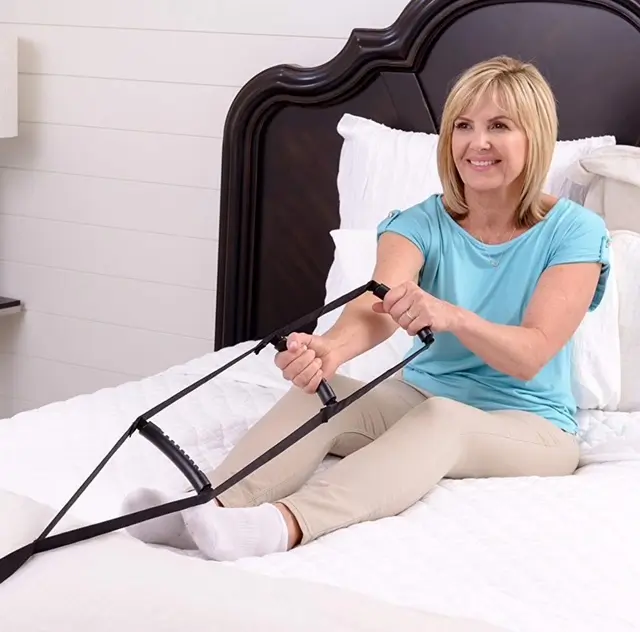
Need the professional, ready-made version? Check out this bed ladder through The Wright Stuff, a physical therapist owned online retailer. Quick and easy to install. Click the button below for more details.
Recommended Bed Rails To Ensure Safety
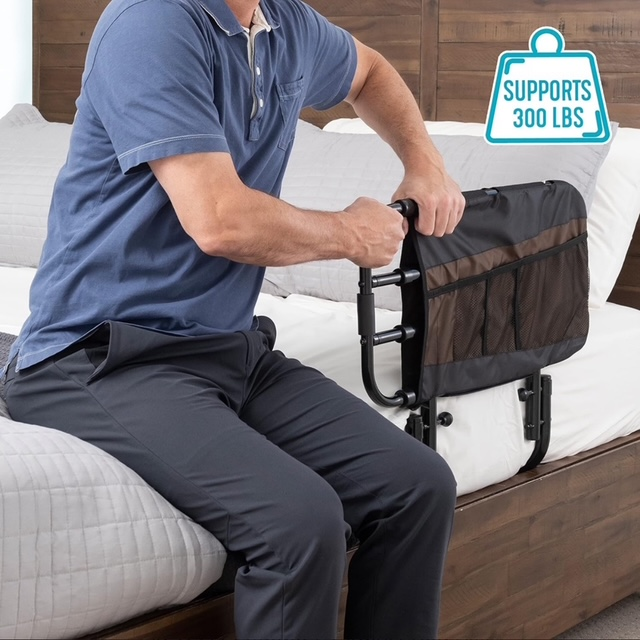
Bed rails are often recommended for individuals with limited mobility to get into and out of bed safely. Bed rails work well in conjunction with bed ladders helping to reduce falls. For more information click the link below.
What Is Bed Mobility?
Bed mobility is the ability to move from side to side in bed, along with the ability to lie back and sit up while getting into and out of bed. Of course, bed mobility is an important part of our daily lives, and when trunk control, upper body and lower body strength is hindered or limited, bed mobility can be affected.
How Is The DIY Bed Ladder Different From The Traditional Bed Ladders Found Online?
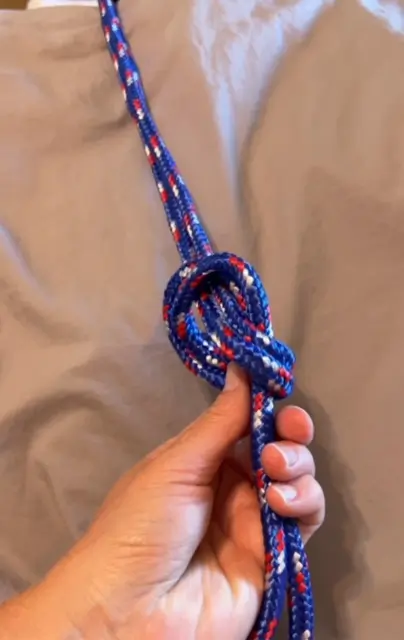
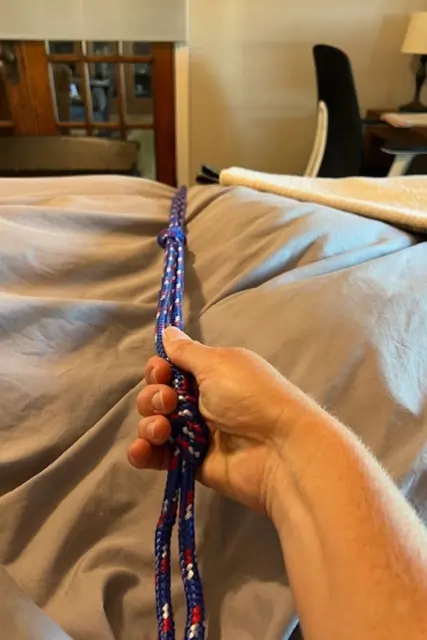
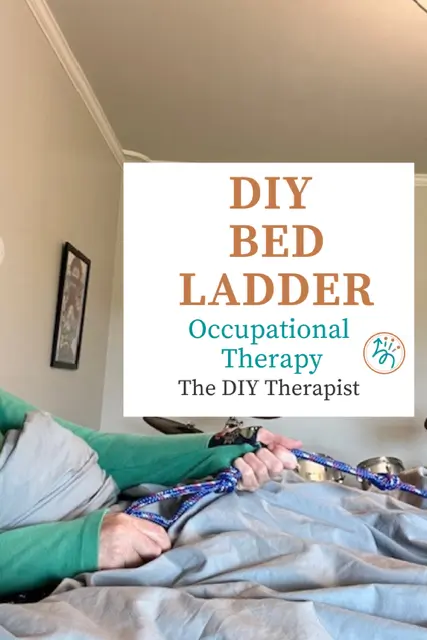
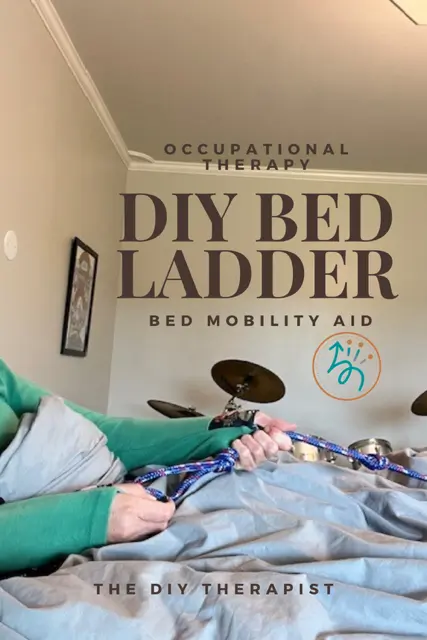
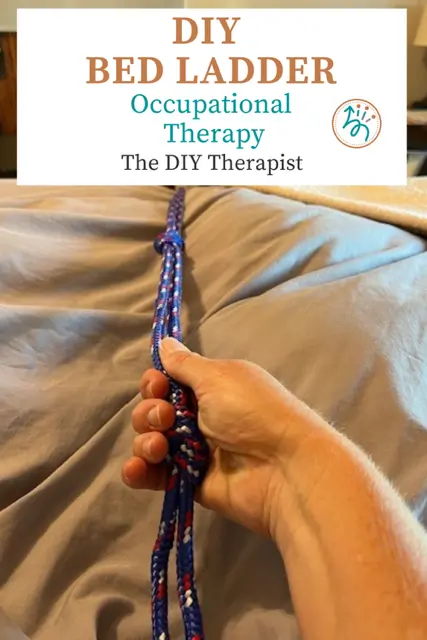
Bed ladders that are found online typically have a ladder type horizontal rungs for users to grab ahold of. Additionally, some of the products that are sold have built up, cushioned rungs to grab hold of. On the other hand, the DIY bed ladder does not have any horizontal rungs, but instead uses knots as its gripping surface. The forearm can also be slid in between the ropes above each knot (see picture above). You can adjust the knots as needed based on the user’s preferences on the knot placement. Furthermore, double knots can also be added for a wider gripping surface by adding a second knot on top of the first. If you need additional knots or want double knots in your bed ladder, a more lengthy rope will be needed.
More DIY Daily Living Aids

Looking For More Ready-Made Daily Living Aids?
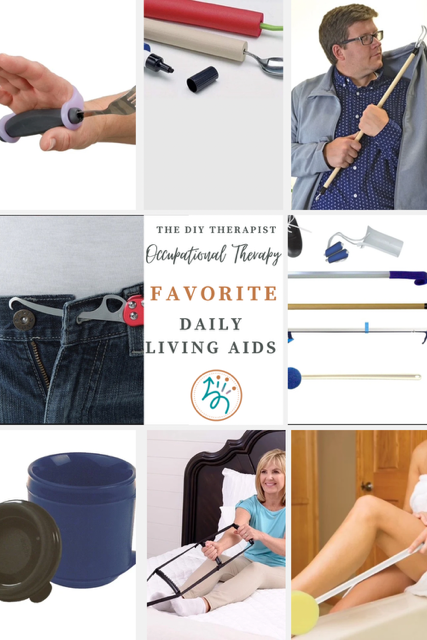
Check out my list of favorite daily living aids that can help enhance independence in day-to-day tasks. Click the link below to see the full list.
Who May Benefit From Using A Bed Ladder?
Individuals who need assistance sitting up or lying down in bed may benefit from using a bed ladder.
Intact upper body strength is important when using a bed ladder. Discuss with your physical or occupational therapist regarding whether a bed ladder is a good fit for you. Bed rails are recommended in combination with a bed ladder. More on bed ladders below.
Those who may benefit from the use of a bed ladder include:
- Limited hip mobility
- Differences in trunk and core strength
- Back discomfort or pain
- Anyone who has difficulty getting into or out of bed
- Spinal cord injuries
- Pregnancy
- Differences in lower extremity and trunk strength
- Older adults
- After surgery such as abdominal or back surgery
What Type Of Rope Should Be Used?
Whatever type of rope you decide to use, make sure it is soft to the touch for the user, and strong enough for this project. Because some ropes can feel scratchy, it’s best to avoid those. Today, I used a braided polypropylene rope that we already had on hand. It is approximately a 1/2 inch thick.
Always check for wear and tear of the rope, and any damages that may have occurred. For this reason, ropes may need to be replaced.
How Long Should The Rope Be?
The rope should be at least double the length of your bed, plus the extra length needed for looping through your footboard or bed frames as well as for tying knots. Please note, depending on any foot boards and where you will be looping the rope at the foot of the bed, you may need extra length. If you do not have a foot board, you will have to loop through the bed frame which will require extra rope length. DO NOT CUT THE ROPE UNTIL YOU ARE SURE OF THE LENGTH YOU NEED!
Bed Rails And The Bed Ladder
Bed rails are often recommended as a part of bed mobility especially when upper and lower body strength as well as trunk control are limited. This assistive device can help prevent falls into and out of the bed, and can also help with side to side bed mobility.

Use Bed Rails To Ensure Safety
The Stander EZ Adjust Bed Rail is a great addition to your bed to ensure safety getting into and out of bed, helping to reduce falls as well as falling out of bed. Quick and easy to install. Click the button below for more details.
Side Of Bed Positioning Helps With Rolling
The bed ladder can also be positioned on the side of the bed to assist rolling side to side. The length of the rope will need to be shortened, and can be looped under the metal bed frame.
Special Considerations
- Make sure the rope you use is strong enough to hold your weight.
- Check the rope regularly making sure the rope has not begun to fray.
- Regularly check all knots ensuring they are secure, and check for any wear and tear.
- Discuss with your personal physical or occupational therapist regarding the use of any adaptive equipment including a bed ladder and bed rails.
- If you have concerns regarding entanglement, please keep the bed ladder far enough away to prevent any entanglement.
- Bed rails are recommended to go along with the bed ladder. See section above.
How To Make A Bed Ladder
Materials Needed
- Rope (The rope I used is a braided polypropylene rope). See note above regarding varying lengths.
- Scissors or knife to cut rope
- Bed frame or footboard to loop the rope
Instructions
- First, loop the rope under the footboard or bed frame at the foot end of the bed. Pull rope through so that both ends of the rope are of equal length on both sides. Do not cut the rope until you are 100% sure of the length you need. If needed, tie the knots first.
- Next, tie knots based on your needs, approximately 9 inches to 1 foot apart
- Adjust the knots to the user’s preference.
- If you haven’t yet, cut any excess rope.
- Lastly, tie a knot at the end of the ropes to make sure no fraying occurs on the ends that have been cut.
*It is vitally important that the rope and knots are regularly checked for wear and tear, and any damage as well as making sure the knots have remained secure.
READY TO SHOP?
I compiled a list of my favorite daily living aids to enhance independence in the home. To see the full list, click the button below.


Pingback: 25 Must-Have Materials for DIY Assistive Technology Projects - Equip2Adapt
This is a fantastic article! There are so many great ideas for creating your own DIY assistive tech toolkit. Thank you for the link!
This is an excellent idea that I need. However, you mention using a footboard. I live in a camper trailer, and the bed I’m in only has a mattress on a plywood board—no headboard or footboard. I do have a bedrail that is an under-mattress type. Do you have a suggestion for me?
Hi Helen,
Here are a couple ideas for you regarding the bed ladder and your camper. If there is a SOLID STRUCTURE you could secure an eye hook to at the foot of the bed then that might be an option. Or another option might be to possibly place a solid structure like a 1×4 between the mattress and the plywood. The piece of wood would be held down by body weight and the bed ladder could attach to it. Make sure whatever you choose, it is secure and safe for your situation. Thank you for your feedback and question. Happy Camping!
Here is a link for a heavy duty stainless steel eye hook pad:
https://www.amazon.com/Premium-Stainless-Plastic-Expansion-Activity/dp/B08GFPLY3K/ref=asc_df_B08GFPLY3K?mcid=ce8d8a301e1c36698f4b0b9ea617a6f7&hvocijid=2424134117577445207-B08GFPLY3K-&hvexpln=73&tag=hyprod-20&linkCode=df0&hvadid=721245378154&hvpos=&hvnetw=g&hvrand=2424134117577445207&hvpone=&hvptwo=&hvqmt=&hvdev=c&hvdvcmdl=&hvlocint=&hvlocphy=9013664&hvtargid=pla-2281435180458&psc=1